Can You Turn Your Shopify Store Into an App?

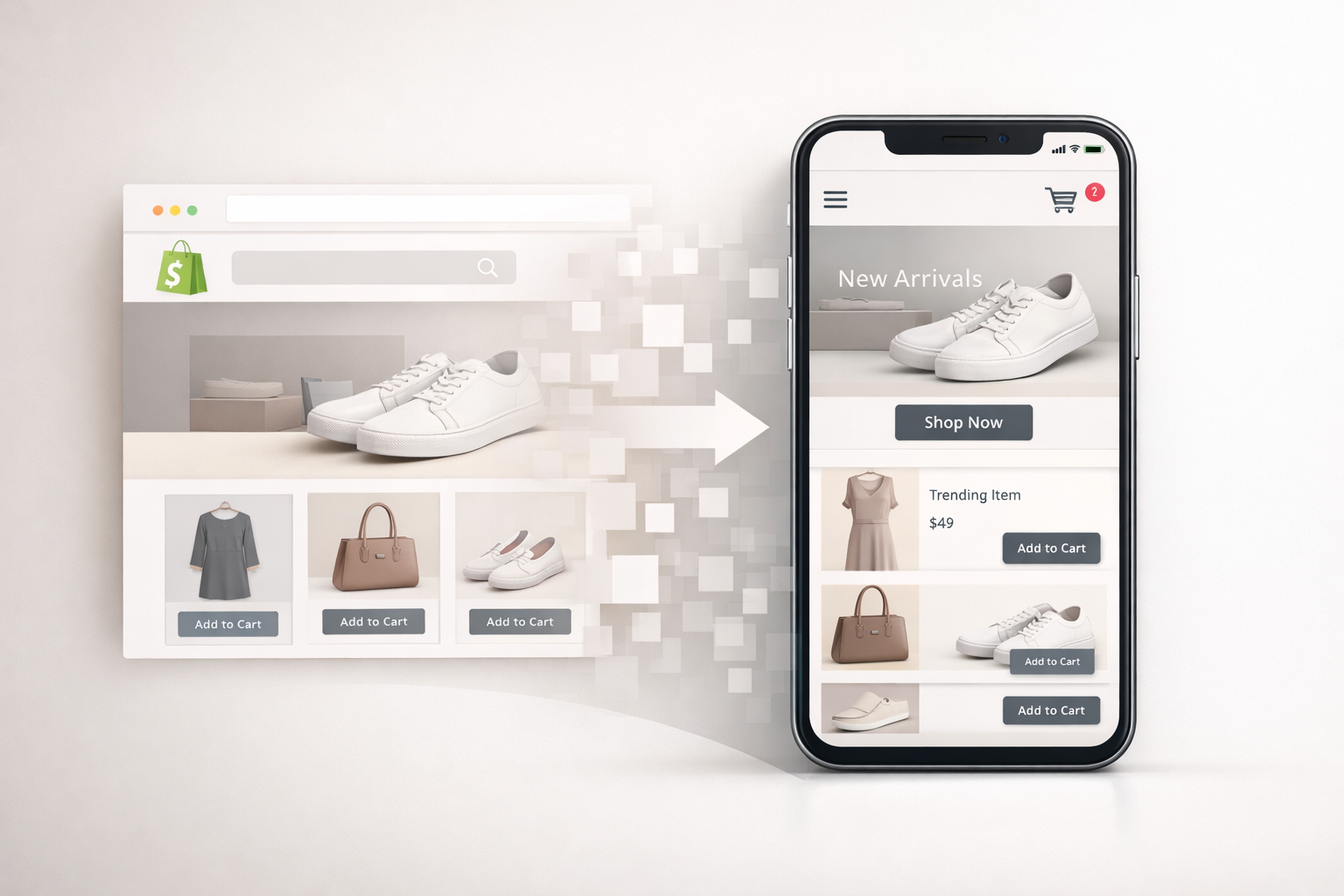
You’re managing your Shopify store, sales are growing, and then the thought hits you: “Should I have an app for this?”
It’s one of the most common questions store owners ask as they scale and for good reason. Mobile commerce isn’t slowing down. Customers are browsing, saving, and buying from their phones more than ever. And somewhere in the back of your mind, having your own app just feels like the next logical step.
But is it? And more importantly can you actually do it without a massive budget or a team of developers?
Short answer: yes, you absolutely can turn your Shopify store into a mobile app. But there are multiple ways to do it, each with real trade-offs. The right path depends on where your business is today and where you want it to go.
Quick Answer: Yes. You can transform your Shopify store into a mobile app using third-party app builders, custom development, or Progressive Web Apps (PWAs). The best option depends on your budget, technical skills, and growth goals.
Why Store Owners Want a Shopify App
Before diving into the “how,” it’s worth understanding the “why” because the motivation often determines which solution actually makes sense.
Better Customer Experience
Apps are fast. They load instantly, feel smoother than mobile browsers, and remove a lot of the friction that causes customers to abandon carts. When someone has your app installed, buying from you becomes almost effortless and that matters enormously in e-commerce.
Push Notifications = More Sales
This is the big one. Unlike emails that get buried or ads that get ignored, push notifications land directly on a customer’s lock screen. A well-timed “Your wishlist item is back in stock” or “Flash sale 24 hours only” notification can drive a meaningful spike in sales. Websites simply can’t replicate this reliably.
Brand Perception
There’s something about having a dedicated app that signals credibility. It tells customers you’re serious, established, and invested in their experience. For brands competing in crowded niches, that perception can make a real difference.
Customer Retention
Apps naturally encourage repeat usage. They sit on the home screen as a constant reminder. Customers who download your app are already your most loyal buyers and an app gives you a direct, ongoing line to them that no other channel can match.
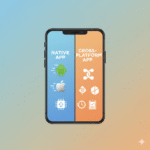
Three Main Ways to Turn Your Shopify Store Into an App
Option 1 – Use a Shopify Mobile App Builder (Most Popular)
App builders are third-party platforms that connect directly to your Shopify store and generate a fully functional mobile app no coding required. You customize the design, set up your navigation, and the tool handles publishing to the App Store and Google Play.
Popular options include Tapcart, Vajro, and Shopney, all of which offer Shopify-native integrations and visual drag-and-drop editors.
Pros: No technical skills needed, fast setup (often within days), significantly cheaper than custom development, and most tools include push notification features out of the box.
Cons: You’ll pay a monthly subscription fee that scales with features. Customization has limits if you want something truly unique, you’ll hit a ceiling. You’re also dependent on a third-party platform, which means if they change pricing or shut down, you’re affected.
Ideal for: Small to mid-sized stores with solid mobile traffic and a growing base of repeat customers.
Option 2 – Build a Custom Mobile App (Advanced)
This means hiring developers or a development agency to build your app from scratch a fully bespoke product built around your exact business needs.
Pros: Complete control over features, design, and performance. You can build things no app builder template will ever offer. Custom apps are also far more scalable as your business grows.
Cons: It’s expensive depending on complexity, you could be looking at anywhere from tens of thousands to significantly more. Development takes months, not days. And once it’s live, ongoing maintenance, updates, and bug fixes become your responsibility (or your agency’s retainer).
Ideal for: High-revenue brands with specific feature requirements that off-the-shelf tools simply can’t meet.
Option 3 – Create a Progressive Web App (PWA)
A PWA is essentially your website behaving like an app. Customers can add it to their home screen, it loads quickly, and it works offline all without going through the App Store. It’s the middle-ground option that often gets overlooked.
Pros: Much cheaper and faster to build than a native app. No App Store approval process to navigate. Works across all devices and platforms.
Cons: Push notifications are unreliable on iOS, which is a significant limitation given how much of mobile traffic runs on iPhones. It also doesn’t carry the same “native app” feel that customers are used to, and you won’t appear in App Store search results.
Ideal for: Budget-conscious store owners who want an improved mobile experience without the full commitment of a native app.
Costs – How Much Does It Take to Turn a Shopify Store Into an App?
App Builders
Most app builders charge a monthly subscription. Entry-level plans typically start around $50–$100/month, with more feature-rich plans running $200–$400/month or more. It’s predictable and manageable, but it adds up over time.
Custom App Development
This varies enormously. A relatively simple custom app might start around $15,000–$30,000. A complex build with advanced features, custom integrations, and a polished UI can easily exceed $100,000. Add ongoing maintenance costs on top of that.
Hidden Costs Worth Knowing
Apple and Google both charge annual developer fees to publish apps. You’ll also face costs around updates (apps need to stay compatible with new OS versions), bug fixes, and any new features you want to add down the line. These aren’t huge, but they’re real and first-time app builders often don’t budget for them.
Is Turning Your Shopify Store Into an App Worth It?
This is the question that actually matters, and the honest answer is: it depends.
When It Makes Sense
If you have a strong base of repeat customers who buy from you regularly, an app gives you a direct channel to them that’s worth its weight in gold. If your analytics show that the majority of your traffic is mobile, and you’re seeing friction in the checkout flow, an app could meaningfully improve conversion. And if you’re generating consistent revenue and looking for the next lever to pull, this is a reasonable investment.
When It’s Probably Not Needed
If your store is new, your traffic is low, or you’re still figuring out your product-market fit an app is a distraction. The fundamentals matter more: a fast, mobile-optimized website, a solid email list, and a reliable acquisition strategy. Don’t build an app to solve a problem you don’t actually have yet.
Common Mistakes Store Owners Make
Building an app too early is the most common one. An app amplifies what’s already working it doesn’t fix what isn’t.
Ignoring mobile optimization first is a close second. If your Shopify storefront performs poorly on mobile browsers, an app won’t save you. Fix the foundation before adding layers.
Choosing tools blindly by going with the most-advertised app builder rather than the one that fits your specific needs leads to frustration and wasted spend.
Overestimating push notifications is also worth flagging. They’re powerful but only when used with restraint. Bombard your customers and they’ll uninstall the app. Strategy matters as much as the feature itself.
How to Decide the Best Approach
Run through these four questions and your answer will usually become clear.
What’s your budget? If it’s tight, PWA or an entry-level app builder. If you have meaningful resources, custom dev becomes viable.
How comfortable are you with tech? App builders require almost no technical knowledge. Custom development requires managing a technical team or agency.
Where is your business right now? Early-stage stores should focus elsewhere. Established stores with repeat buyers are prime candidates.
What are your long-term goals? If you’re building a brand that will live and grow for years, investing in a custom app eventually makes strategic sense. If you’re testing the waters, start with an app builder.
Conclusion
Yes you can absolutely turn your Shopify store into a mobile app. The technology exists, the tools are accessible, and depending on your situation, it might be one of the best investments you make in your business.
But the smarter question isn’t can you. It’s should you and when.
Start by making sure your mobile storefront is fast, clean, and converting well. Build an audience. Generate consistent revenue. Then, once your business has the foundation to support it, revisit the app question with a clear sense of what you need and what you can realistically invest.
An app built at the right time, for the right reasons, can meaningfully strengthen customer loyalty and drive repeat sales. An app built too early is just an expensive distraction.
Know the difference and build accordingly.
FAQs
Can I turn my Shopify store into an Android app?
Yes. App builders like Tapcart and Vajro publish to both the Google Play Store and Apple App Store. Custom development can also target Android specifically or both platforms simultaneously.
Can I publish my Shopify app on the App Store?
Yes, but Apple’s review process applies. Your app needs to meet their guidelines, which cover design standards, functionality, and content. Most app builders handle this submission process for you.
Do I need coding skills?
Not if you’re using an app builder. These platforms are designed specifically for non-technical store owners. Custom development, on the other hand, requires hiring someone who does.
Will an app increase my sales?
It can but it’s not guaranteed. The impact depends on your existing traffic volume, how engaged your customer base is, and how well you use features like push notifications. Think of an app as a retention tool, not an acquisition channel.
Is a Shopify app necessary for small stores?
Not at the beginning. Small stores are almost always better served by optimizing their mobile website experience, building an email list, and focusing on getting consistent sales before adding the complexity of an app.