Physical Address
304 North Cardinal St.
Dorchester Center, MA 02124
Physical Address
304 North Cardinal St.
Dorchester Center, MA 02124
Smart Green Tech for a Sustainable Future
Smart Green Tech for a Sustainable Future
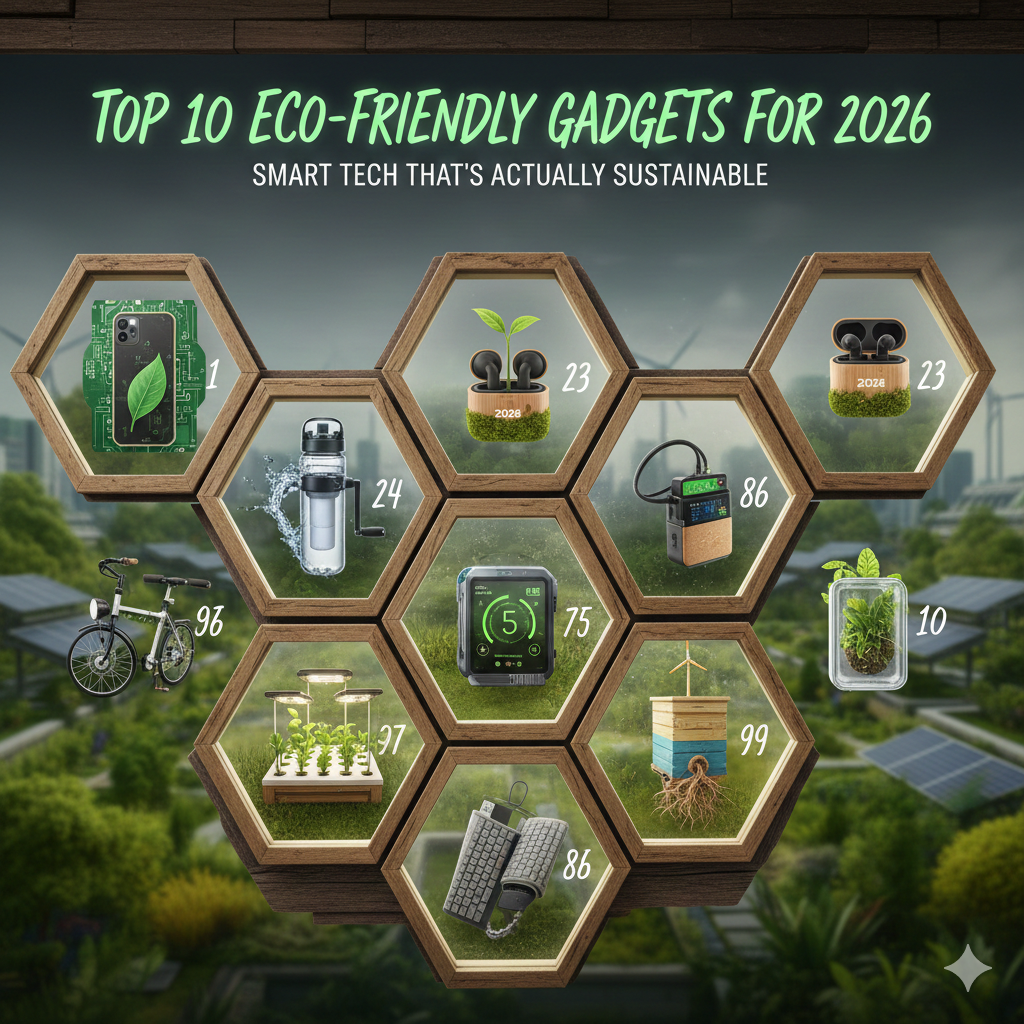
Eco-friendly gadgets are devices designed to minimize environmental impact through energy efficiency, recycled materials, and repairable designs. 2026 marks a turning point with stricter right-to-repair laws, improved energy standards, and genuine sustainability innovations replacing marketing gimmicks.
Energy costs continue climbing worldwide. Households are feeling the pressure of inflated electricity bills. Simultaneously, businesses are scrutinizing operational expenses more carefully than ever.
Stricter sustainability regulations have been implemented across major markets. The European Union’s right-to-repair legislation now mandates minimum repairability standards. Similar policies are being adopted in California and other progressive regions. Consequently, manufacturers can no longer ignore sustainability demands.
Consumer behavior has shifted dramatically. People are actively seeking low-impact technology options. Environmental consciousness is no longer a niche concern but a mainstream purchasing criterion. Moreover, younger generations refuse to support brands that prioritize profit over planet.
However, greenwashing remains rampant throughout the tech industry. Companies slap “eco” labels on products with minimal environmental benefits. Vague sustainability claims confuse well-intentioned consumers. Therefore, this list focuses exclusively on gadgets with verifiable, measurable environmental advantages.
Our selection criteria ensure authenticity and real-world impact. Every gadget featured meets specific sustainability benchmarks.
Energy efficiency stands as our primary consideration. Products must demonstrate measurably lower power consumption compared to conventional alternatives. Energy Star certification or documented watt usage provides verification.
Material composition matters significantly. We prioritize gadgets manufactured from recycled plastics, reclaimed metals, or biodegradable components. Furthermore, packaging must minimize waste through recyclable or compostable materials.
Repairability and modular design separate genuine eco-products from greenwashed alternatives. Devices should allow component replacement without specialized tools. Battery swaps, screen repairs, and part upgrades extend product lifespans substantially.
Longevity encompasses both hardware durability and software support. Manufacturers must commit to multi-year updates. Battery health technologies should prevent premature degradation. Products designed for quick obsolescence were automatically excluded.
Real-world usefulness ensures our recommendations serve practical purposes. Gimmicky gadgets that sit unused after initial novelty contribute to waste regardless of eco-credentials. Every item selected solves genuine problems efficiently.
Solar power banks combine portability with renewable energy charging. Built-in photovoltaic panels convert sunlight directly into stored electrical energy.
These devices excel at reducing grid dependency for mobile charging needs. High-efficiency solar cells now charge smartphones in 4-6 hours of direct sunlight. Battery capacity ranges from 20,000 to 50,000 mAh in leading models.
Travelers, outdoor workers, and emergency preparedness enthusiasts benefit most. Power security during grid outages provides genuine peace of mind. Remote locations without reliable electricity access become navigable.
The 2026 generation features dramatically improved conversion efficiency. Previous models struggled with cloudy conditions and indoor charging. Current iterations incorporate advanced monocrystalline panels that capture diffused light effectively. Additionally, weatherproofing standards have improved significantly.
Smart thermostats revolutionize home heating and cooling efficiency. These devices learn occupancy patterns and automatically adjust temperatures accordingly.
Electricity usage drops by 20-30% in typical households after installation. The AI analyzes when residents are home, asleep, or away. Temperature adjustments happen proactively rather than reactively. Furthermore, geofencing technology detects when residents leave and returns temperatures to energy-saving modes.
Homeowners see maximum benefits from these systems. Rental situations work well if landlords permit installation and tenants receive bill savings. Multi-zone systems optimize efficiency in larger properties by heating or cooling only occupied areas.
Machine learning algorithms continuously refine performance over weeks and months. Initial manual adjustments teach the system about personal preferences. Subsequently, the thermostat anticipates needs without constant intervention.
Modular smartphones challenge planned obsolescence directly. Components like batteries, cameras, and screens can be replaced independently without replacing entire devices.
Battery replacement proves especially valuable. Conventional smartphones become frustratingly slow as batteries degrade after 2-3 years. Modular designs allow $30 battery swaps instead of $800 phone replacements.
Screen damage no longer mandates complete device retirement. Cracked displays are swapped in minutes using simple tools. Camera modules upgrade without discarding functional components.
E-waste reduction impacts are substantial. Electronics represent the fastest-growing waste stream globally. A single modular phone lasting 6-8 years prevents multiple devices from reaching landfills. Moreover, rare earth minerals remain in circulation through component reuse.
E-Ink displays consume power only when changing screen content. Static text requires zero energy to maintain visibility. This fundamental difference from LCD screens creates dramatic efficiency gains.
Battery life extends to weeks or even months on single charges. Writers can draft entire novels between recharges. Students annotate textbooks throughout semesters without seeking outlets.
The technology suits focused work exceptionally well. Distraction-free writing environments boost productivity. Eye strain decreases compared to backlit screens during extended reading sessions. Furthermore, outdoor visibility surpasses traditional tablets in bright sunlight.
Writers, students, and founders focused on deep work gain maximum value. Anyone spending hours daily reading documents or writing text should consider E-Ink alternatives.
Solar Bluetooth speakers eliminate charging cable dependence for portable audio. Integrated panels maintain battery levels during outdoor use.
The charging mechanism works through direct photovoltaic conversion. Solar cells generate electricity when exposed to light. This energy either powers the speaker directly or replenishes internal batteries.
Outdoor performance naturally exceeds indoor capabilities. Direct sunlight provides optimal charging conditions. However, bright artificial lighting or indirect natural light still contributes meaningfully to battery maintenance.
The eco-benefits extend beyond renewable charging alone. Reduced charging cycles extend battery lifespan. Outdoor enthusiasts eliminate generator or power bank requirements for extended trips. Marketing hype around “fully solar” speakers misleads—most still include USB charging for flexibility.
Water-saving shower systems use sensors to reduce consumption without compromising experience. Flow rate adjustments happen dynamically based on usage patterns.
Sensors detect when users step away from direct water flow. Reduction to trickle flow during soaping or shampooing saves gallons per shower. Full pressure resumes automatically when needed.
Household savings accumulate rapidly. Average families reduce water usage by 30-40%. Hot water heating represents significant energy consumption. Therefore, both water and electricity bills decrease substantially.
This technology remains surprisingly underrated in eco-tech discussions. Water scarcity affects billions globally. Yet simple sensor systems can halve shower consumption painlessly.
Universal USB-C chargers eliminate device-specific charging cable waste. A single charger powers laptops, phones, tablets, and accessories.
USB-C standardization matters tremendously for sustainability. Previous generations required separate chargers for each device. Drawers filled with obsolete cables represent material waste and mining impact.
European Union regulations mandate USB-C ports on all portable electronics by 2026. This policy change forces manufacturers toward universal standards. Consequently, consumer confusion decreases while environmental benefits multiply.
Charger clutter disappears from homes and offices. Travel packing simplifies dramatically. One 65-watt USB-C charger handles multiple device types simultaneously through multiple ports.
Wireless peripherals manufactured from recycled plastics and reclaimed aluminum reduce virgin material demand. Post-consumer plastics find new life as functional office equipment.
Materials typically include 70-80% recycled content in leading eco-models. Ocean-bound plastics intercepted before reaching waterways serve as primary sources. Aluminum cases come from recycled beverage containers and electronic scrap.
Battery efficiency matters significantly in wireless devices. Sleep modes activate after brief inactivity periods. Some models last 12-18 months on single charges. Solar-assisted charging extends intervals even further.
Remote workers who spend hours daily at keyboards should prioritize sustainable peripherals. The tactile experience matches conventional products while environmental impact drops dramatically.
Smart plugs identify which devices consume disproportionate electricity. Real-time monitoring reveals phantom power drain from devices in standby mode.
Installation requires no technical expertise. Plugs insert between outlets and device cords. Mobile apps display instantaneous power draw and historical usage patterns.
Homes benefit by identifying inefficient appliances worthy of replacement. Small offices reduce operational costs by addressing energy vampires. Gaming systems, older refrigerators, and space heaters often emerge as surprising energy hogs.
Return on investment calculations become straightforward. If monitoring reveals $30 monthly waste from inefficient devices, smart plugs pay for themselves within 2-3 months. Subsequently, awareness drives behavioral changes that compound savings.
Fitness trackers prioritize essential health metrics while minimizing power consumption. Unlike smartwatches that replicate smartphone functions, dedicated trackers focus on movement, heart rate, and sleep monitoring.
Battery life extends to 7-14 days between charges. Minimal screen usage conserves energy. Background sensing requires surprisingly little power when optimized properly.
The distinction between fitness trackers and smartwatches matters significantly. Full-featured smartwatches demand daily charging due to bright displays and constant connectivity. Simple trackers achieve health monitoring goals with fraction of energy consumption.
Athletes, health-conscious individuals, and anyone prioritizing wellness over notifications should choose dedicated trackers. Sustainable materials and repairable designs further enhance eco-credentials.
| Gadget | Eco Benefit | Power Source | Best For | Sustainability Score |
|---|---|---|---|---|
| Solar Power Bank | Renewable charging | Solar + USB | Travelers, outdoor workers | 4.5/5 |
| Smart Thermostat | 20-30% energy reduction | Grid-powered | Homeowners | 5/5 |
| Modular Smartphone | Reduces e-waste | Rechargeable battery | Everyone | 4.5/5 |
| E-Ink Tablet | Weeks-long battery | Rechargeable battery | Writers, students | 4/5 |
| Solar Speaker | Solar charging | Solar + USB | Outdoor enthusiasts | 4/5 |
| Water-Saving Shower | 30-40% water reduction | Grid-powered | Households | 5/5 |
| USB-C Charger | Universal compatibility | Grid-powered | Everyone | 4/5 |
| Recycled Peripherals | Recycled materials | Rechargeable battery | Remote workers | 4/5 |
| Smart Plug | Energy monitoring | Grid-powered | Homes, offices | 4.5/5 |
| Fitness Tracker | Low power design | Rechargeable battery | Health-focused users | 4/5 |
The cost versus savings calculation increasingly favors sustainable technology. Initial prices may exceed conventional alternatives by 15-30%. However, operational savings accumulate quickly through reduced energy consumption.
Smart thermostats costing $200 typically save $150-300 annually on heating and cooling. Payback periods span less than two years. Subsequent years represent pure savings. Similarly, water-saving shower systems recover costs within 12-18 months.
Performance trade-offs have narrowed considerably. Early eco-gadgets often sacrificed functionality for sustainability. Current generation products match or exceed conventional alternatives in core performance metrics.
E-Ink tablets demonstrate this evolution clearly. First-generation models suffered from slow refresh rates and limited functionality. Modern devices handle annotation, note-taking, and document management fluidly.
Prioritization depends on individual circumstances and usage patterns. Homeowners should address thermostats and water systems first due to substantial ongoing savings. Frequent travelers benefit immediately from solar power banks. Remote workers gain efficiency from sustainable peripherals.
Red flags signal superficial sustainability claims. Vague language like “eco-conscious” or “nature-inspired” without specific metrics indicates greenwashing. Genuine products quantify recycled content percentages and energy savings.
Certifications provide objective verification. Energy Star ratings indicate proven efficiency. Cradle to Cradle certification assesses entire product lifecycles. B Corporation status demonstrates company-wide sustainability commitment. EPEAT ratings evaluate electronics comprehensively across environmental criteria.
Marketing language often misleads intentionally. “Made with recycled materials” might mean 5% content rather than majority composition. “Designed for sustainability” may reference aesthetic choices rather than functional attributes.
Investigate third-party testing results rather than trusting manufacturer claims alone. Independent reviews reveal real-world performance. Environmental organizations publish gadget assessments regularly.
Small changes accumulate into significant environmental impact. Replacing even one conventional gadget with a sustainable alternative contributes meaningfully. Perfect shouldn’t prevent good—incremental improvement matters more than unattainable ideals.
Founders and creators carry unique influence through visible choices. Teams notice leadership decisions about office equipment and operational practices. Social media presence amplifies sustainable technology adoption beyond immediate circles.
The path forward requires encouragement rather than guilt-tripping. Shame-based messaging alienates potential allies. Celebrating progress and highlighting benefits proves far more effective than criticizing imperfection.
Start with your highest-use devices. Identify which gadgets consume the most energy or require frequent replacement. Those represent optimal sustainability intervention points. Subsequently, expand to secondary devices as replacements become necessary.
The technology exists today for meaningfully greener living. Adoption simply requires informed decision-making and willingness to prioritize long-term thinking over short-term convenience. Every purchase represents a vote for the world we want to build.