What Is Generative Engine Optimization?
Generative Engine Optimization is the practice of structuring a website and its content so AI systems select it as a source when answering a user’s question. Traditional SEO optimizes a page to rank in a list of search results. GEO optimizes content to become part of the answer itself. When someone asks ChatGPT how to solve a problem in your industry, GEO determines whether your business gets named in that answer or gets skipped entirely. This distinction matters because the mechanics are different. Search engines rank based on links, keywords, and historical trust signals built over years. Generative AI models select sources in real time based on how clearly a page answers a specific question, how well it demonstrates topical depth, and how easily its claims can be verified. A page can hold a strong Google ranking and still never get mentioned by ChatGPT or Perplexity, because those systems are not reading the page the way Google’s ranking algorithm does. GEO closes that gap.

How AI Models Actually Choose What to Cite
AI models are not ranking pages against a keyword. They are generating an answer and pulling supporting information from sources they consider reliable and relevant to the specific question asked. Several factors influence that selection in practice.
Content that states an answer plainly, close to the top of the page or section, gets pulled more consistently than content that builds up to a conclusion slowly. AI models tend to extract the sentence or paragraph that most directly answers the question, not the most eloquent one.
Headings phrased as questions, short paragraphs, and clearly separated sections make it easier for a model to identify which part of a page answers which question. Long unbroken blocks of text are harder to extract from cleanly, even if the information inside them is accurate.
A single page covering a topic in isolation is weaker than a page that sits inside a cluster of related, interlinked content. Depth signals that a source has real expertise rather than a single optimized page built to catch a keyword.
Claims backed by specific numbers, named methodology, or checkable data get treated as more trustworthy than vague claims. This is part of why generic marketing language performs worse in AI citation than content built around actual results.
Content that gets updated and that states the same facts consistently across a domain builds more trust than content that contradicts itself across pages or hasn’t been touched in years.
What My Generative Engine Optimization Services Include
AI Search Readiness Audit
Before any changes are made, I check whether ChatGPT, Claude, and Perplexity are already citing your business, and if so, for what. I review your existing content against the factors above to identify exactly where the gaps are, whether that’s structure, depth, technical accessibility, or missing topical coverage.
Content and Structure Optimization
I rewrite and restructure key pages so they answer real questions directly and clearly. This includes reworking headings into question format, adding direct-answer sections near the top of relevant pages, and removing the kind of padding that search engines and AI models both increasingly penalize.
Topical Authority Building
A single optimized page rarely earns consistent AI citation on its own. I build a content structure around your core topics, connected through internal linking, so your site reads as a genuine authority rather than a single lucky match.
Schema and Technical Implementation
I implement structured data, including FAQPage, Organization, and Service schema, so both search engines and AI crawlers can accurately parse what your business does, who it serves, and what questions it answers.
Community & Support
Join a thriving community of users and access dedicated support to help you every step of the way.
What My Realistic GEO Services Timeline Looks Like
Audit and strategy phase. This includes checking current AI citation status and identifying content gaps.
Core page restructuring and schema implementation. This is where existing high-value pages get rebuilt for clarity and extraction.
Supporting content and topical cluster development. This is usually the phase that determines whether citation gains are temporary or durable.
Early citation results typically start appearing, particularly for less competitive, more specific queries.
Broader topical authority builds, and citation frequency for more competitive queries begins to improve.
GEO Across Different Industries
GEO is not applied the same way across every business type, and a services page that pretends otherwise is not being fully honest.
SaaS and technology companies
benefit from GEO around comparison and how-to queries, since buyers frequently ask AI assistants to compare tools before ever visiting a website
B2B and industrial businesses
Gain benefit from deep technical content that AI models can cite for specific process or specification questions, where accuracy and depth matter more than broad appeal. insights into your target audience and industry trends through our in-depth market research.
Professional service businesses
benefit from location and expertise-based queries, where AI citation often overlaps with answer engine optimization for local and service-specific questions.
E-commerce brands
benefit from product comparison and buying-guide style queries, where AI assistants increasingly summarize options before a purchase decision is made.
Generative Engine Optimization vs Traditional SEO
GEO and SEO share technical foundations but optimize for different outcomes. SEO aims to rank a page within a list of search results. GEO aims to get that content cited, quoted, or summarized inside an AI-generated answer, sometimes without a click ever happening.
| Factor | Traditional SEO | Generative Engine Optimization |
|---|---|---|
| Primary goal | Rank in search results | Get cited in AI-generated answers |
| Key signal | Backlinks and domain authority | Content clarity and topical depth |
| Measurement | Rankings and organic clicks | Citation frequency and AI-referred traffic |
| Platforms targeted | Google, Bing | ChatGPT, Claude, Perplexity, AI Overviews |
| Content structure | Keyword-focused | Question and answer focused |
The strongest long-term strategy treats these as complementary, not competing, since a page that performs well for both tends to reinforce trust signals across both systems.
Real results. Real data.
Every number below is pulled from live dashboards not estimates.
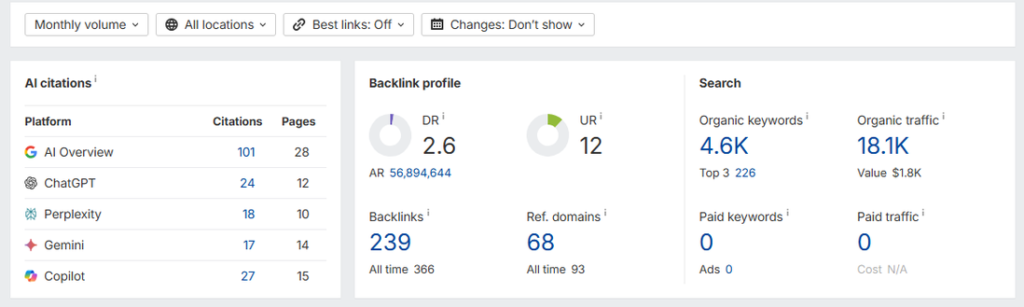
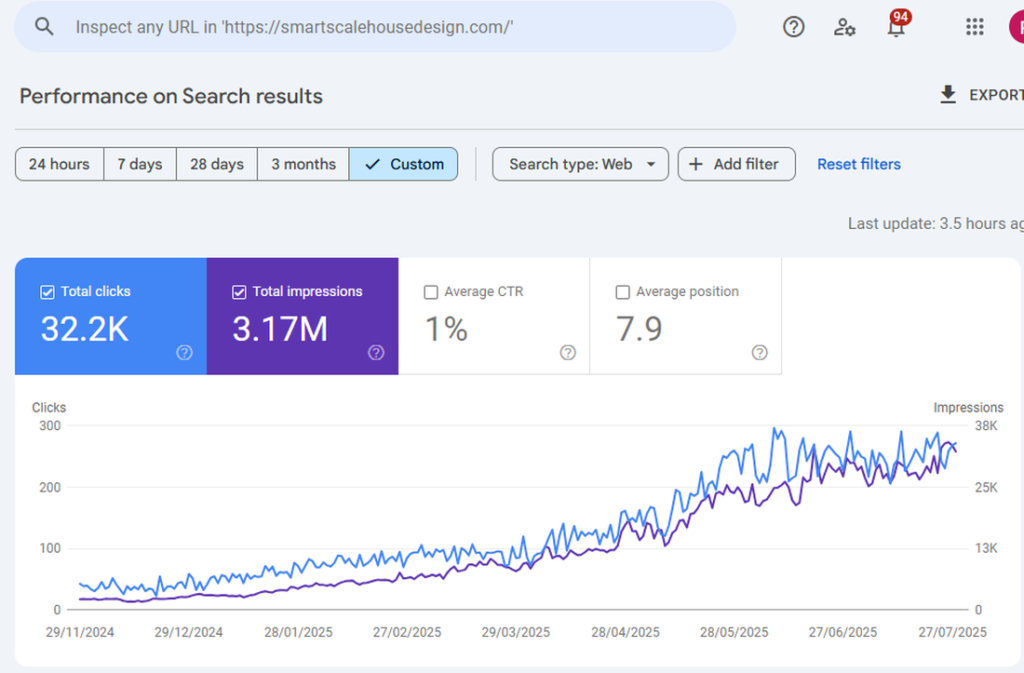
SmartScale House Design
Organic traffic growth without a single backlink.
Key Metrics:
- 37.9M Image Search Impressions
- 3.17M Web Search Impressions
- 32.2K Web Search Clicks
- 4.6K+ Organic Keywords Ranking
- 226 Keywords in Top 3 Positions
- 187 AI Citations Across ChatGPT, Gemini, Perplexity, Copilot & AI Overviews
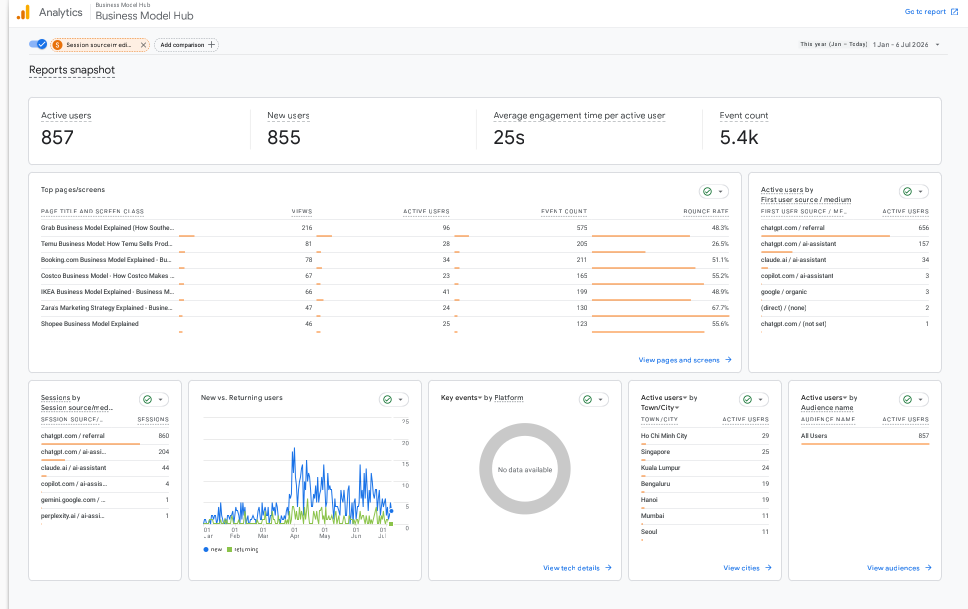
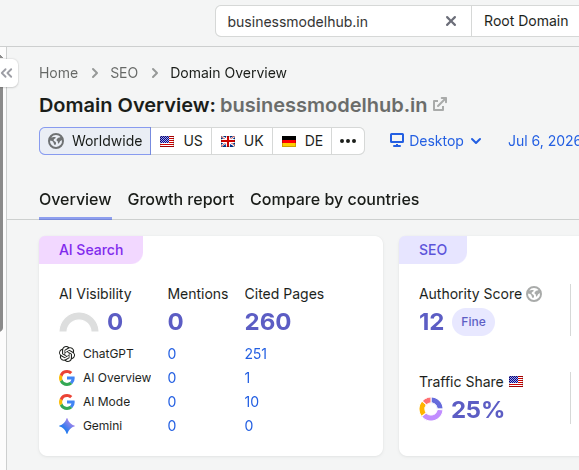
Business Model Hub
A GEO experiment that proved AI search works.
Key Metrics:
- 857 Active Users From Ai in 6 months
- 656 Users from ChatGPT Referral
- 860+ Sessions from ChatGPT
- 260 Cited Pages Across AI Platforms
- 90%+ of Traffic from AI Search
- Zero Backlinks, Zero Ad Spend
Frequently Asked Questions (FAQs)
Find answers to the most common questions about [Your Product/Service]. If you can’t find what you’re looking for here, please contact us.
Generative Engine Optimization is the process of structuring content so AI platforms like ChatGPT, Claude, and Perplexity cite a business when answering a related question.
SEO focuses on ranking pages within search results. GEO focuses on getting content cited or referenced inside an AI-generated answer, which depends more on clarity and structure than on backlinks alone.
Most businesses see early citation improvements within 60 to 90 days for less competitive queries. Broader topical authority typically builds over 4 to 6 months.
Backlinks help, but they matter less for AI citation than for traditional Google ranking. Content clarity, structure, and demonstrated topical depth carry more weight. A result of 187 AI citations was achieved with zero backlink spend.
ChatGPT, Claude, Perplexity, and Google AI Overviews are the primary platforms tracked and optimized for.
If potential customers in your industry ask AI assistants questions related to your products or services, GEO applies. This includes SaaS, B2B, industrial, professional services, and e-commerce businesses.
No. The strongest strategy uses both together. Traditional SEO builds the foundation of trust and technical accessibility that GEO then builds on top of.