7 Best Headless E-commerce Platforms for Small Businesses

If your e-commerce growth strategy includes ultra-fast performance, custom shopping experiences, or omnichannel storefronts without platform bottlenecks, headless commerce isn’t just a buzzword. It’s a scaling architecture that lets you decouple your front end from your back end and deliver experiences that convert at higher rates. I’ve deployed and audited headless setups for stores with modest budgets and high growth ambitions, and I’ve seen how the right platform can reduce technical debt while accelerating velocity. In this post, I break down the 7 best headless e-commerce platforms for small businesses that balance power, affordability, developer experience, and real-world scalability. You’ll get direct comparisons that matter for SEO, API integration, inventory management, performance, and long-term growth so you can pick the platform that fits your roadmap with minimal rework.
In Short :
For small businesses looking to adopt headless commerce, the best platforms are Shopify Plus, BigCommerce, CommerceTools, Saleor, Medusa, WordPress + WooCommerce Headless (with WPGraphQL), and Snipcart each offering different balances of API power, cost, ease of use, and customization.
Quick Comparison Table
| Platform | Best For | Hosted / Self | API Strength | Cost Level |
|---|---|---|---|---|
| Shopify Plus | Predictable scaling + ease | Hosted | Excellent | High |
| BigCommerce | Built-in commerce + headless | Hosted | Strong | Mid |
| CommerceTools | Enterprise-grade, future-proof | Hosted | Best-in-class | High |
| Saleor | GraphQL + open source | Self / Managed | Excellent | Low–Mid |
| Medusa | Open-source Node ecommerce | Self | Strong | Low |
| WooCommerce Headless | Custom content + commerce | Self | Flexible | Low |
| Snipcart | Simple cart overlay | Hosted | Good | Low |
What Headless E-commerce Actually Means
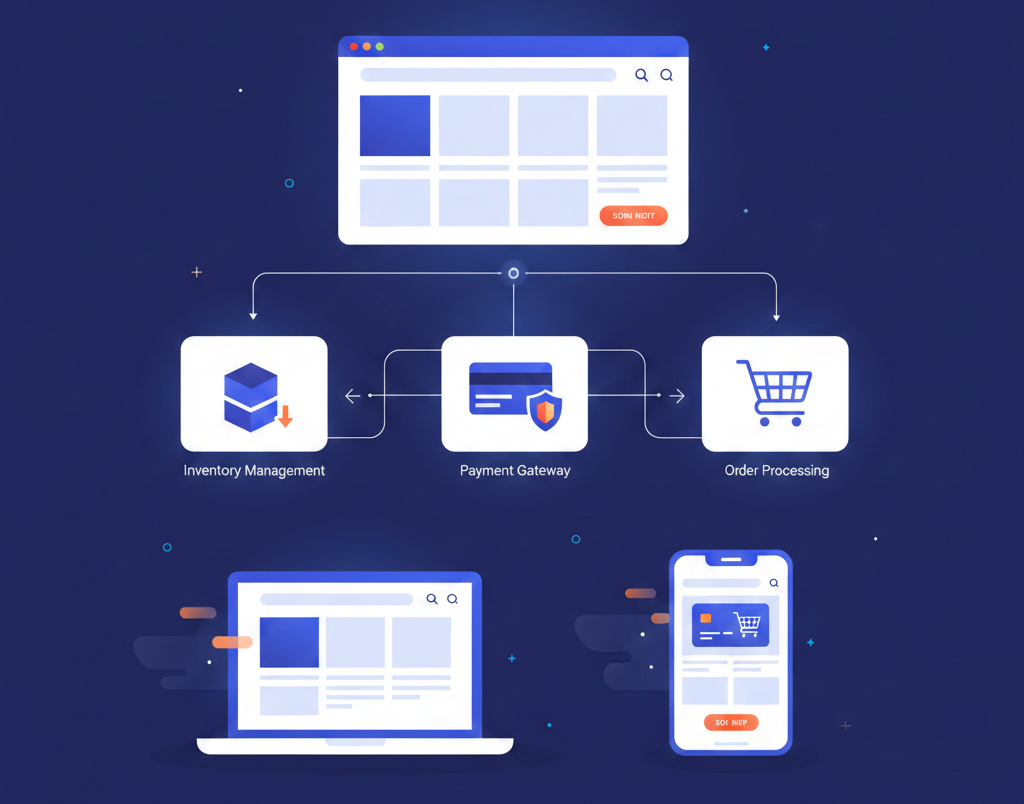
Headless commerce separates your front end (what customers see) from your back end (commerce logic). The front end calls commerce APIs to:
- Display products
- Handle carts and checkout
- Sync inventory
- Process orders
This separation gives you flexibility to deliver custom UX (Jamstack, mobile apps, PWAs) while keeping commerce data centralized.
For small businesses, headless shouldn’t mean complexity for its own sake. It should unlock performance, faster experimentation, and better API integrations without stranding your team in technical debt.
1. Shopify Plus (with Storefront API)
Why It’s a Top Choice
Shopify Plus isn’t just a SaaS platform it’s one of the most mature headless ecosystems. With Storefront APIs (REST & GraphQL), you can build headless experiences while Shopify manages:
- Hosting
- Performance
- Security
- PCI compliance
- CDN delivery
For small businesses, this means less time on infrastructure and more time on conversion rate optimization.
Key Advantages
- Predictable scaling: SaaS architecture handles peak load automatically.
- API ecosystem: Both REST and GraphQL give flexibility for custom front ends.
- App marketplace: Thousands of extensions to add capabilities without custom code.
- International support: Multi-currency, multi-locale inventory management.
When to Pick It
You have a small team, want speed without ops overhead, and want to move fast with custom UX.
2. BigCommerce (Headless)
Why BigCommerce Makes the List
BigCommerce blends strong commerce features with a headless architecture via:
- Storefront APIs
- GraphQL support
- SDKs for popular front-end frameworks
It gives you hosted commerce capabilities with flexibility to run a custom front end (React, Next.js, Vue, etc.).
Key Advantages
- Built-in commerce logic: No need to reinvent catalog, tax, or checkout logic.
- Open SaaS model: Extensible without heavy dev lift.
- B2B capabilities: Good for stores that mix B2C and B2B.
- Strong app ecosystem: Extensions for payments, shipping, analytics.
When to Pick It
You want robust commerce features out of the box but still want decoupled front-end flexibility.
3. CommerceTools
Why CommerceTools Is Future-Proof
CommerceTools was built from the ground up as a headless, API-first platform. It’s designed for maximum modularity and global scale.
Key Advantages
- API-first everywhere: Every function is API accessible.
- Microservices architecture: Independent services for carts, orders, inventory, pricing.
- Enterprise-grade workflows: Great for complex product catalogs or pricing logic.
- Global performance: Build experiences that serve multiple regions efficiently.
When to Pick It
Your business has high complexity (multi-region pricing, multiple brands, complex rules) and technical capacity to leverage APIs.
4. Saleor (GraphQL-First)
Why Saleor Is Ideal for Dev-Driven Stores
Saleor is a modern, open-source, GraphQL-first commerce platform built with Python and Django. It’s powerful, API-centric, and ideal for custom experiences.
Key Advantages
- GraphQL API: Fast and efficient queries for modern JAMstack front ends.
- Open source: No license fees and full control over logic.
- Modular architecture: Plugins and customizations are supported cleanly.
- PWA readiness: Good support for performant storefront frameworks.
When to Pick It
You want an open-source headless solution with modern API design and you’re comfortable managing hosting or opting for a managed service.
5. Medusa
Why Medusa Works for Small Teams
Medusa is an open-source Node.js e-commerce backend built specifically for headless commerce. It’s lightweight and developer-friendly.
Key Advantages
- Node ecosystem: Easy integration with modern JavaScript stacks.
- APIs first: REST APIs designed for performance and flexibility.
- Modular services: Customize carts, orders, and inventory logic.
- Low cost: No licensing fees, deploy anywhere.
When to Pick It
You want a lightweight, modern headless backend with JavaScript compatibility and low operational cost.
6. WordPress + WooCommerce Headless (with WPGraphQL)
Why This Hybrid Still Matters
WooCommerce powers millions of small stores. When paired with WPGraphQL and a decoupled front end (e.g., Gatsby, Next.js), it becomes a cost-effective headless stack.
Key Advantages
- Huge ecosystem: Themes, plugins, and community.
- GraphQL access: WPGraphQL makes WooCommerce queryable headlessly.
- Content + commerce: Perfect if content strategy drives conversions.
- Low hosting cost: Deploy on affordable cloud instances.
When to Pick It
Your business already uses WordPress heavily and you want commerce plus content without platform lock-in.
7. Snipcart
Why Snipcart Is Uniquely Simple
Snipcart isn’t a full commerce platform with a dashboard, but it injects commerce capabilities into any static site or frontend.
Key Advantages
- Cart overlay: Drop-in shopping cart for any site.
- Simple API: Easy to integrate with JAMstack sites.
- No backend required: Great for product landing pages or simple catalogs.
- Flexible payments: Supports common payment gateways.
When to Pick It
You need lightweight commerce on static marketing sites or content-first projects where a full platform is overkill.
How to Pick the Right Headless Platform
Choosing the right headless platform depends on your team, budget, goals, and growth plan. Here’s how I’d think about it:
1. Team Size and Skills
- Small or non-technical team: Prefer Shopify Plus or BigCommerce.
- Dev team with modern JS skills: Consider Medusa, Saleor, or CommerceTools.
- Content-heavy + marketing focus: WooCommerce Headless shines.
2. Budget and TCO (Total Cost of Ownership)
- Lower predictable cost: Hosted SaaS platforms.
- Engineering cost conscious: Merchant-friendly ecosystems reduce custom dev burden.
- Open-source lovers: Platforms like Saleor or Medusa reduce licensing costs but increase ops.
3. API and Integrations
- Strong API coverage needed: CommerceTools and Shopify Plus excel.
- GraphQL preference: Saleor and WooCommerce with WPGraphQL are right for JAMstack builds.
- Simple cart APIs: Snipcart is ideal.
4. Performance and Conversion
Headless architecture can improve performance by enabling static or dynamic front ends that prefetch and cache content aggressively.
- Prebuilt commerce features + headless flexibility: Shopify Plus
- Lightweight, fast APIs: Saleor, Medusa
- Content + commerce together: WooCommerce Headless
Common Headless Use Cases for Small Businesses
Here are scenarios where headless commerce is especially worth the investment:
Performance-Driven Stores
If conversion rate optimization hinges on speed (think PWAs, mobile experiences), headless lets you separate frontend from backend bottlenecks.
Omnichannel Experiences
Want a mobile app, social commerce, kiosks, and marketplace experiences all sharing the same commerce backend? Headless APIs make this simple.
Custom UX and Storytelling
Branded experiences that go beyond templates animations, interactive catalogs, and unique checkout flows require decoupled front ends.
Headless Pitfalls (And How to Avoid Them)
Headless commerce isn’t a silver bullet. Here’s what trips teams up:
1. Overcomplicating the Stack
Headless doesn’t mean you should add more tools than necessary. Pick platforms that cover commerce logic well so you can focus on frontend innovation.
2. Ignoring SEO and Performance Metrics
A headless frontend must still be optimized for SEO and Core Web Vitals. Modern frameworks (Next.js, Gatsby) help, but you need good practices.
3. Underestimating Ops and Hosting
If you choose a self-hosted backend, you must plan for:
- Scalability
- Security
- Backups
- Monitoring
Managed options reduce this burden.
Final Verdict: Best Headless Platforms for Small Business Growth
Here’s my distilled recommendation:
- Best for predictable scaling with minimal ops: Shopify Plus
- Best hosted headless with strong commerce logic: BigCommerce
- Best enterprise-grade API first: CommerceTools
- Best open-source with GraphQL: Saleor
- Best lightweight open-source: Medusa
- Best if content strategy drives commerce: WooCommerce Headless
- Best simple cart injection: Snipcart
Headless commerce can elevate your small business from template constraints to bespoke user experiences but choose wisely.
FAQs
What is headless e-commerce?
Headless e-commerce decouples the storefront (what users interact with) from the commerce backend, using APIs to connect the two. This enables custom front ends and faster performance.
Is headless commerce worth it for small businesses?
Yes, if performance, custom UX, or omnichannel experiences directly impact your conversion goals. For simple stores, traditional platforms might still suffice.
Do headless platforms cost more?
They can. SaaS headless platforms have predictable fees. Open-source options reduce licensing but increase ops costs.
Which front-end frameworks are best for headless commerce?
Popular choices include Next.js, Nuxt.js, Gatsby, and SvelteKit all of which work well with headless APIs.
Can I switch from a traditional store to headless later?
Yes. Most platforms support APIs that let you migrate to headless architectures without losing commerce data.