Shopify Returns Solution: Flexible Workflows Explained

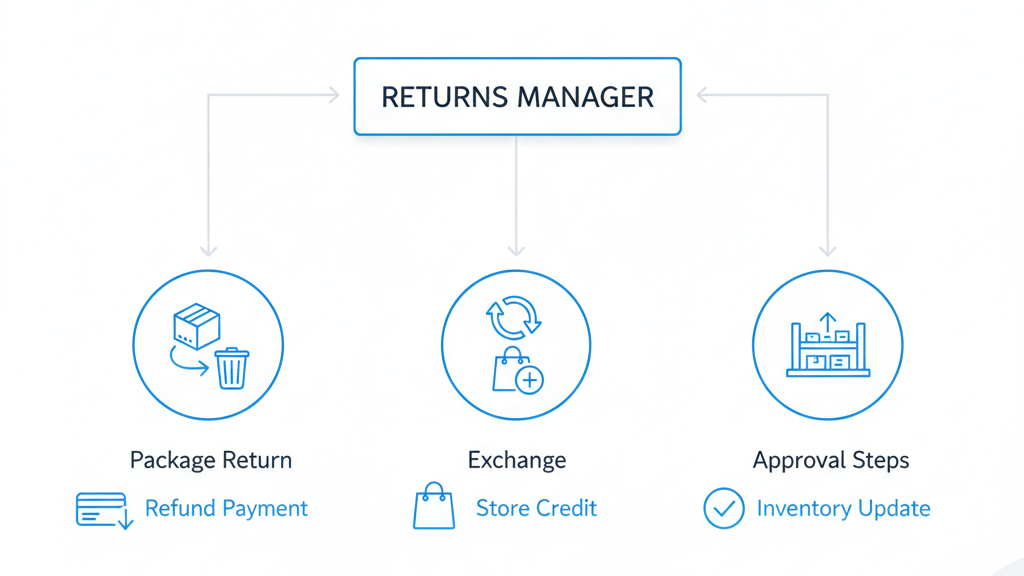
A Shopify returns solution with flexible workflows lets you design custom return rules, approvals, exchanges, refunds, and restocking logic without drowning in manual support tickets. I’m talking about returns that are faster for your customers and way cheaper for your business to handle.
Why Returns Are a Growth Problem (Not Just a Support Issue)
Here’s what I’ve noticed working with Shopify stores: most brands think returns are just a customer support headache. But I’m here to tell you returns are a growth problem hiding in plain sight.
The hidden cost of returns in Shopify stores
Every return touches multiple parts of your business. Your support team spends time processing it. Your inventory gets weird. Your cash flow takes a hit. And if you’re doing this manually at scale? I’m watching you burn money you don’t need to burn.
Why rigid return policies hurt customer trust
When I see a brand with a one-size-fits-all return policy, I already know they’re losing sales. Customers want to buy from you, but that strict “no returns on sale items” policy? I’m telling you, it’s killing conversions before checkout even happens.
How modern brands think about returns
The smartest brands I work with don’t treat returns as tasks to minimize. They treat them as experiences to optimize. I’m seeing stores turn returns into exchanges, exchanges into upsells, and frustrated customers into repeat buyers.
Why “flexible workflows” matter now
You can’t scale a Shopify store on manual processes. I’m explaining why flexible workflows matter: because your returns system needs to be as smart as your marketing funnel.
What Is a Shopify Returns Solution?
Let me break this down simply. A Shopify returns solution is a system that automates how you handle returns inside your store. I’m not talking about just clicking “refund” in the Shopify admin.
What problem it solves
It solves the chaos between when a customer says “I want to return this” and when money, inventory, and trust all get handled correctly.
How it sits between critical systems
I’m showing you how returns touch everything:
- Orders: The original purchase data
- Customers: Their history, preferences, and trust level
- Inventory: What comes back, where it goes, whether it’s resellable
- Payments: Refunds, store credit, payment processing
Returns vs refunds vs exchanges
Let me clarify this because I see confusion all the time:
- Return: Customer sends product back
- Refund: You give money back
- Exchange: Customer swaps for different size/color/product
I’m pointing this out because a return doesn’t always mean a refund. And that distinction is where you save revenue.
What Do “Flexible Workflows” Actually Mean?
Alright, I’m getting into the good stuff now. Flexible workflows mean your returns system can make smart decisions based on rules you set up once.
Rule-Based Returns
I’m talking about automatic decisions like:
- Return windows: 7 days for final sale, 30 days for regular items, 60 days for VIP customers
- Product-specific rules: Maybe I’m letting customers return t-shirts but not underwear
- Sale vs non-sale items: Different rules for different margin levels
Conditional Approvals
This is where I get excited. Your system can:
- Auto-approve low-value items: Why am I making someone wait for approval on a $15 return?
- Manual review for high-value orders: I’m flagging that $800 jacket for a quick human check
- Fraud detection logic: If I’m seeing 5 returns from the same address in 2 weeks, the system flags it
Refund Logic
I’m giving you options here:
- Original payment method: Standard refund
- Store credit: Keep the revenue, give them 10% bonus credit
- Partial refunds: Used item? I’m refunding 70% automatically
- Instant vs post-inspection: Trust-based instant refunds for good customers, inspection for new ones
Exchange Workflows
This is where I’m protecting your revenue:
- Size or color exchanges: Customer keeps spending, just gets the right fit
- Even exchange vs price-difference logic: If they’re swapping to something pricier, I’m collecting the difference
- Inventory hold: I’m reserving the new item while the old one ships back
Return Shipping Logic
I’m making this smart:
- Free return shipping rules: VIP customers always get free returns
- Customer-paid labels: First-time buyers might pay for return shipping
- Local vs international: Different rules based on location
How Flexible Return Workflows Work Inside Shopify
Let me walk you through this like I’m explaining your system architecture:
Step 1: Customer initiates return
They log into your return portal, select their order, pick items to return
Step 2: System checks eligibility
I’m checking: Is this within the return window? Is this product returnable? Any exceptions?
Step 3: Workflow decides approval
Based on your rules, I’m either auto-approving or sending to your team for review
Step 4: Customer selects refund or exchange
They choose: original payment refund, store credit, or exchange for different item
Step 5: Systems update automatically
I’m updating inventory, processing the refund, generating shipping labels, all without you touching it
Step 6: Brand tracks centrally
You see everything in one dashboard—status, reasons, trends
Common Return Workflow Problems Shopify Merchants Face
I’m seeing these problems every single day:
Too many support tickets: Your team is copy-pasting refund emails instead of growing the business
Manual refund processing: Someone is literally clicking through Shopify admin for every return
Inventory mismatch: Returns come back but your inventory count is wrong for days
Lost exchange orders: Customer wants to exchange, but the new order never gets created properly
Refund delays causing chargebacks: You’re slow to refund, customer disputes with their bank, you lose the chargeback fee too
How Flexible Workflows Solve These Problems
I’m mapping solutions directly to those problems:
Automation reduces tickets: 80% of returns process themselves, your team handles exceptions only
Smart rules reduce fraud: I’m catching sketchy patterns before you lose money
Exchange workflows protect revenue: Customer stays a customer, you keep the sale
Faster refunds improve trust: Money back in 2 days instead of 2 weeks builds loyalty
Who Needs Flexible Shopify Return Workflows the Most?
I’m telling you exactly who benefits most:
DTC brands with high order volume: If you’re doing 500+ orders a month, manual returns are killing you
Fashion and apparel stores: High return rates are normal in fashion. I’m helping you manage that efficiently
Subscription or repeat-purchase brands: Your LTV depends on trust. I’m making returns frictionless
International Shopify stores: Different countries, different rules. Flexible workflows handle complexity
Brands scaling beyond founder-led support: You can’t personally handle every return anymore. I’m building the system that scales
Key Features to Look for in a Shopify Returns Solution
I’m not naming tools here, just telling you what matters:
Self-service return portal: Customers handle it themselves, branded to your store
Rule-based automation: Set rules once, system decides forever
Exchange-first workflows: Nudge customers toward exchanges, not refunds
Inventory sync: What comes back shows up in your inventory immediately
Analytics and return reasons: I’m tracking why people return so you can fix product or messaging issues
Multi-location returns handling: Different warehouses, different rules, one system
Returns as a Revenue Protection System
I’m reframing how you think about this. Returns aren’t a cost center. I’m showing you how they protect revenue.
Why exchanges matter more than refunds
When I turn a return into an exchange, you keep the customer and the revenue. That’s a win I’m optimizing for.
Store credit workflows explained
Offer 10% bonus for store credit instead of refund. Customer feels rewarded, you guarantee future revenue. I’m seeing 40-60% of customers choose this option when it’s presented well.
How flexible returns increase LTV
Easy returns mean customers trust you. Trust means they buy again. I’m building lifetime value through post-purchase experience.
The psychology of easy returns
When I know I can return something easily, I’m more likely to hit “buy now.” Your return policy is a conversion tool, not just a cost.
Operational & Financial Impact of Flexible Return Workflows
Let me show you the numbers side:
Support cost reduction: I’m seeing teams cut return-related support time by 70%
Faster refund cycles: 2-3 day refunds instead of 7-10 days
Better inventory forecasting: You know what’s coming back and when
Reduced reverse-logistics chaos: Returns flow through a system, not through confused team members
Common Mistakes Shopify Brands Make With Returns
I’m calling out what I see going wrong:
One-size-fits-all return policy: Treating a $20 item the same as a $200 item
Manual approvals at scale: Requiring human approval for every single return
No data on return reasons: You’re accepting returns but not tracking why
Treating exchanges as refunds: Missing the opportunity to keep revenue
How to Design Your First Flexible Returns Workflow
I’m giving you a practical starting point:
Step 1: Define return eligibility
What’s returnable? What’s the time window? Any product exceptions?
Step 2: Decide refund vs exchange priority
I’m recommending exchange-first. Nudge customers toward swapping, not refunding.
Step 3: Set approval thresholds
Auto-approve under $50. Manual review over $200. You decide the numbers.
Step 4: Align inventory rules
Where do returns go? How fast do they get back in stock? I’m syncing this automatically.
Step 5: Communicate clearly
Customers need to know the policy before buying. I’m making it visible and simple.
Future of Shopify Returns: Where This Is Heading
I’m watching these trends closely:
AI-driven approval logic: Machine learning that gets smarter about fraud and exceptions
Fraud-aware workflows: Systems that detect patterns across the industry, not just your store
Instant store credit systems: Refund before the item even ships back for trusted customers
Returns becoming part of CX strategy: Not a separate system, but integrated into your entire customer journey
Flexible Returns Are a Competitive Advantage
Here’s what I want you to remember: brands win or lose trust at the return stage. I’m not exaggerating. Your customer had a problem with their order. How you handle that moment determines if they ever buy from you again.
Returns are part of your brand experience now. I’m treating them like I treat checkout, email flows, and customer service. They’re not an afterthought.
If you’re building a Shopify brand for the long term, I’m telling you: flexible return workflows aren’t optional. They’re how you scale trust.