Physical Address
304 North Cardinal St.
Dorchester Center, MA 02124
Physical Address
304 North Cardinal St.
Dorchester Center, MA 02124
Smart Green Tech for a Sustainable Future
Smart Green Tech for a Sustainable Future
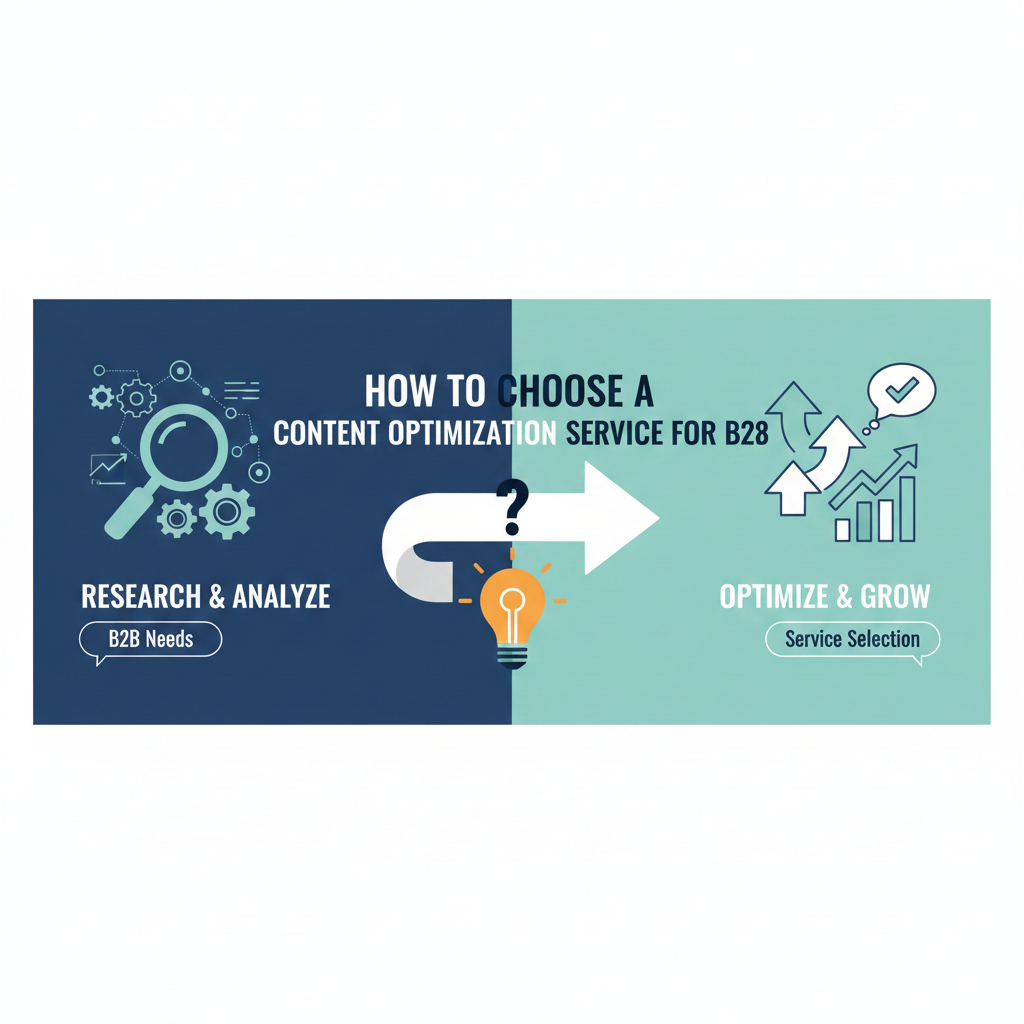
Content optimization is the process of improving your existing content or creating new content so it ranks higher in search engines, attracts the right audience, and drives meaningful business results. For B2B companies, this isn’t just about getting more clicks. It’s about establishing authority in your industry, generating quality leads, and ultimately converting prospects into customers.
The challenge? Many B2B businesses invest heavily in content creation but see little return because their content isn’t optimized for search engines or aligned with how their buyers actually search for solutions. Choosing the right content optimization service can transform your content from invisible to indispensable.
In this guide, you’ll learn what content optimization really means for B2B businesses, how to recognize when you need professional help, what to look for in a service provider, and how to make a smart hiring decision that delivers measurable results.
Think of content optimization as making your content work harder and smarter. It’s not just about stuffing keywords into articles or rewriting headlines. It’s about understanding what your potential customers are searching for, creating content that answers their questions at every stage of their buying journey, and structuring that content so both search engines and busy decision-makers can find and use it easily.
B2B content optimization is fundamentally different from B2C. Your audience isn’t looking for quick entertainment or impulse purchases. They’re researching complex solutions, comparing vendors, building business cases, and often involving multiple stakeholders in the decision. Your content needs to demonstrate expertise, provide detailed information, address specific pain points, and build trust over a longer sales cycle.
Here’s what B2B content optimization typically covers:
Product and solution pages that clearly explain features, benefits, and use cases while targeting high-intent search terms. Case studies that showcase real results and rank for industry-specific problem statements. White papers and guides optimized to capture top-of-funnel research traffic. Blog posts that address common questions and establish thought leadership. Comparison pages that help prospects evaluate options and position your solution effectively.
Each piece serves a specific purpose in your buyer’s journey and needs optimization tailored to that stage.
Not sure if you need professional help? Here are clear indicators that it’s time to bring in experts:
Low website traffic: You’re publishing regularly, but your analytics show minimal organic search traffic. Your content exists but isn’t being discovered.
Blogs not ranking: Your articles don’t appear on the first page of Google for relevant search terms. You’re essentially invisible to potential customers actively looking for solutions.
High bounce rates: Visitors land on your pages but leave immediately. This signals that your content doesn’t match search intent or fails to engage readers quickly enough.
Content not converting: You’re getting traffic, but visitors aren’t downloading resources, requesting demos, or filling out contact forms. Your content attracts but doesn’t persuade.
Difficulty maintaining publishing consistency: Your team struggles to produce quality content regularly because they’re juggling too many priorities or lack a clear strategy.
Outdated or thin content: Much of your existing content is several years old, covers topics superficially, or doesn’t reflect current best practices or your evolved offerings.
If two or more of these sound familiar, content optimization should be a priority.
Content optimization is the process of improving your existing content—or creating new content—so it ranks higher in search engines, attracts the right audience, and drives meaningful business results. For B2B companies, this isn’t just about getting more clicks. It’s about establishing authority in your industry, generating quality leads, and ultimately converting prospects into customers.
The challenge? Many B2B businesses invest heavily in content creation but see little return because their content isn’t optimized for search engines or aligned with how their buyers actually search for solutions. Choosing the right content optimization service can transform your content from invisible to indispensable.
In this guide, you’ll learn what content optimization really means for B2B businesses, how to recognize when you need professional help, what to look for in a service provider, and how to make a smart hiring decision that delivers measurable results.
Think of content optimization as making your content work harder and smarter. It’s not just about stuffing keywords into articles or rewriting headlines. It’s about understanding what your potential customers are searching for, creating content that answers their questions at every stage of their buying journey, and structuring that content so both search engines and busy decision-makers can find and use it easily.
B2B content optimization is fundamentally different from B2C. Your audience isn’t looking for quick entertainment or impulse purchases. They’re researching complex solutions, comparing vendors, building business cases, and often involving multiple stakeholders in the decision. Your content needs to demonstrate expertise, provide detailed information, address specific pain points, and build trust over a longer sales cycle.
Here’s what B2B content optimization typically covers:
Product and solution pages that clearly explain features, benefits, and use cases while targeting high-intent search terms. Case studies that showcase real results and rank for industry-specific problem statements. White papers and guides optimized to capture top-of-funnel research traffic. Blog posts that address common questions and establish thought leadership. Comparison pages that help prospects evaluate options and position your solution effectively.
Each piece serves a specific purpose in your buyer’s journey and needs optimization tailored to that stage.
Not sure if you need professional help? Here are clear indicators that it’s time to bring in experts:
Low website traffic: You’re publishing regularly, but your analytics show minimal organic search traffic. Your content exists but isn’t being discovered.
Blogs not ranking: Your articles don’t appear on the first page of Google for relevant search terms. You’re essentially invisible to potential customers actively looking for solutions.
High bounce rates: Visitors land on your pages but leave immediately. This signals that your content doesn’t match search intent or fails to engage readers quickly enough.
Content not converting: You’re getting traffic, but visitors aren’t downloading resources, requesting demos, or filling out contact forms. Your content attracts but doesn’t persuade.
Difficulty maintaining publishing consistency: Your team struggles to produce quality content regularly because they’re juggling too many priorities or lack a clear strategy.
Outdated or thin content: Much of your existing content is several years old, covers topics superficially, or doesn’t reflect current best practices or your evolved offerings.
If two or more of these sound familiar, content optimization should be a priority.
Not all content optimization services are created equal. Here’s what comprehensive B2B content optimization should include:
Good keyword research goes far beyond finding high-volume search terms. For B2B, it’s about understanding intent. Are searchers in research mode, comparing solutions, or ready to buy? A quality service identifies long-tail keywords that match your ideal customer profile, analyzes what competitors are ranking for, and focuses on terms that indicate serious buying intent rather than casual browsing.
They should explain their keyword selection in terms you understand and show how each keyword connects to a specific stage in your buyer’s journey.
Random article publishing doesn’t work for B2B. You need a strategic content plan that addresses your audience’s questions comprehensively. This means creating topic clusters around your core offerings, developing pillar pages that establish authority on main themes, and building supporting content that covers related subtopics in depth.
A solid strategy includes an editorial calendar, clear goals for each piece of content, and a plan for regularly updating and expanding your content library over time.
This is where the technical meets the practical. On-page optimization involves refining titles and meta descriptions to improve click-through rates, restructuring headings for better readability and SEO impact, improving content flow so decision-makers can quickly find what they need, and ensuring your content matches what search engines expect for your target keywords.
For B2B, this also means writing for the busy executive who’s scanning rather than reading every word, while still providing depth for those who need it.
Even the best content won’t perform if technical issues prevent search engines from properly crawling and indexing your site. A good service checks for problems like slow page loading speeds that frustrate visitors, broken links that damage user experience, mobile responsiveness issues, confusing site structure that makes content hard to find, and duplicate content that dilutes your SEO impact.
They should explain these issues in plain language and work with your team to resolve them.
Your existing content is an asset that needs maintenance. B2B topics evolve, your offerings change, and search algorithms update their preferences. A thorough content audit identifies which pieces are underperforming, which ones need updating with current information, which should be consolidated or removed, and which represent opportunities to expand into comprehensive resources.
The best services don’t just create new content—they maximize the value of what you already have.
Transparency matters. Your optimization service should provide regular reports showing organic traffic trends, keyword ranking improvements, conversion metrics from organic search, engagement indicators like time on page and bounce rate, and ultimately, how content optimization contributes to pipeline and revenue.
These reports should be easy to understand, not buried in jargon, and should clearly connect SEO activities to business outcomes.
When you’re evaluating potential partners, use this practical checklist:
Do they understand your industry? B2B SaaS is different from manufacturing, which is different from professional services. Industry knowledge accelerates results and prevents costly missteps.
Do they provide examples or case studies? Ask for specific examples of B2B clients they’ve helped, including before-and-after metrics. Generic testimonials aren’t enough.
Do they offer a strategy or only rewrites? Rewriting existing content is just one tactic. You need a partner who thinks strategically about your entire content ecosystem.
Are they transparent about the process? They should clearly explain what they’ll do, how long it takes, and what you’ll receive. Vague promises of “better rankings” are red flags.
Do they explain metrics in simple terms? If they can’t make SEO understandable to you, they probably can’t create content that’s understandable to your customers.
Do they share realistic timelines? Content optimization is a marathon, not a sprint. Anyone promising first-page rankings in 30 days is either lying or using risky tactics.
Do they communicate regularly? You should expect proactive updates, not silence followed by a monthly report you don’t understand.
Come to initial conversations prepared with these essential questions:
Their answers will reveal their expertise, process, and whether they’re the right fit for your needs.
Avoid these frequent pitfalls:
Picking the cheapest option: Content optimization requires real expertise and time. Rock-bottom pricing usually means inexperienced contractors, template-based approaches, or corners cut in crucial areas like research and strategy. You’ll end up paying twice when you have to fix poor work.
Not checking past results: Testimonials and case studies exist for a reason. If an agency can’t show you concrete examples of B2B clients they’ve helped achieve measurable improvements in rankings, traffic, and leads, that’s a major warning sign.
Ignoring industry knowledge: B2B buying cycles, decision-makers, and content needs vary dramatically by industry. A service that excels at e-commerce optimization might struggle with complex enterprise software. Look for relevant experience.
Expecting instant results: Content optimization compounds over time. Meaningful SEO results typically take three to six months to materialize. Anyone promising immediate transformations either doesn’t understand SEO or is setting you up for disappointment.
Not asking about analytics: If you don’t establish clear success metrics upfront and ensure your service provider will track and report on them, you’ll have no way to evaluate ROI or make informed decisions about continuing or adjusting the engagement.
Content optimization pricing varies based on scope, but here are general ranges:
Basic content optimization ($2,000–$5,000/month): Typically includes keyword research, on-page optimization for a limited number of pages, basic reporting, and perhaps one or two new articles monthly. Suitable for small B2B companies with limited existing content.
Standard optimization ($5,000–$10,000/month): Comprehensive keyword strategy, ongoing content creation and optimization, regular audits, technical SEO monitoring, and detailed analytics. This level works for mid-sized B2B companies with moderate competition.
Premium optimization ($10,000–$25,000+/month): Full-service strategic partnership including extensive content creation, advanced technical SEO, competitive analysis, conversion optimization, and dedicated team support. Appropriate for larger B2B companies in competitive markets or those with complex content needs.
Several factors influence where you’ll fall in these ranges. Content volume matters—optimizing 500 pages costs more than 50. Industry complexity affects pricing since some sectors require deeper expertise. Competitive intensity determines how much effort is needed to rank. Current content quality impacts whether you’re starting from scratch or building on a strong foundation.
Project-based pricing is also available, typically ranging from $5,000 to $50,000 for defined scopes like a complete content audit and optimization plan, a topic cluster development and creation, or a comprehensive site migration with SEO preservation.
Follow this practical process to make a confident decision:
Choosing the right content optimization service is one of the most impactful decisions you can make for your B2B marketing strategy. Quality content that ranks well, engages readers, and converts visitors doesn’t just deliver short-term wins. It creates compounding returns that strengthen over time as your authority grows and your content library expands.
The key is approaching this decision strategically rather than reactively. Take time to understand what you actually need, evaluate potential partners thoroughly, and select based on expertise and fit rather than price alone. Remember that content optimization is an investment in long-term growth, not a quick fix.
The right partner will become an extension of your team, understanding your business deeply, communicating clearly, and consistently delivering measurable improvements in the metrics that matter to your business. When you find that partner, the results speak for themselves through increased visibility, higher-quality leads, and ultimately, stronger revenue growth.
Stop letting valuable content go unnoticed. Get a content performance assessment and discover exactly what’s holding your content back from ranking, converting, and driving qualified leads.